|
Discarding your Fishing Future.
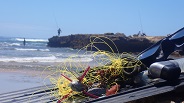
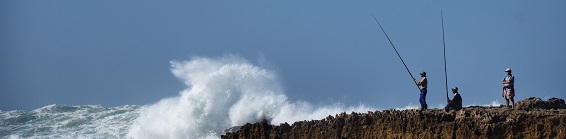
Shoreline Fishing in South Africa is both a popular recreational past time and necessary subsidence activity as a means of supplementing dietary protein requirements distinguished by socio economic circumstances of the fishermen.
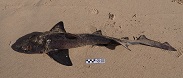
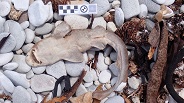
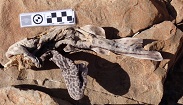
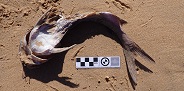
An unsustainable consequence of recreational fishing in South Africa is the discarding, instead of release, of unwanted species. Considered a pest that is ‘pinching my bait’, sharks, rays and sea catfish (Galeichthys spp) are frequently discarded to ‘prevent them stealing my bait again’.

Sharks and Rays are Keystone Species
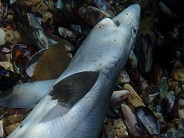
Research has demonstrated that a robust and healthy shark population is, contrary to popular belief, a vital mechanism in bolstering both biodiversity and marine productivity, particularly in inshore and near shore regions.
In a bid to foster a healthy and productive marine habitat, fishermen should, instead of discarding ‘pesky’ sharks, rays and sea catfish, be diligently returning them to the ocean to continue their respective ecological functions.

The Cost To Marine Biodiversity.
Globally, marine fauna populations are crashing with many commercially important species decreasing between 70% and 80% in the past 2 decades, as well as species vital to biodiversity and marine productivity suffering similar biomass losses in the same periods.
Reproductive Vulnerability
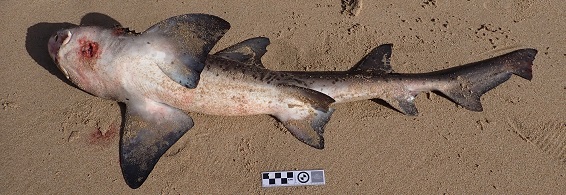
Sharks in particular, as marine keystone species, are vulnerable to indiscriminate persecution such as fishing discards. Most species have a low reproductive rate, making their survival particularly sensitive to exploitation. A shyshark will lay two eggs per year, with eggs taking between 3 and 9 months to develop before hatching. Females will only mature at between 7 and 14 years and may only live for 20 years.
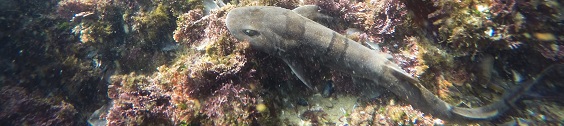
Spotted Gully Sharks have a remarkable gestation of nearly 2 years and give birth to between 6 and 12 pups at a time. They live to an age 21 years and only reach sexual maturity at about 14 years old. Roughly speaking a female only has the ability to produce between 18 and 36 pups in her reproductive life.

Dying from Exhaustion
While technically not considered as discarding, targeting large shark species for sport fishing, the mere act of the 'Fight' of landing a shark could be the death of it. In the 1970's and 1980's when game capture in Southern Africa evolved, capture methods were primitive compared to current methods and resulted in a large percentage die off of capture wildlife. Studies revealed that the chase of capture resulted in massive lactic acid build up from which the game was unable to recover from.

Though no studies have been conducted in marine fauna, and sharks in particular, it is possible that a similar physiological exhaustion, coupled with oxygen depletion and blunt force trauma while thrashing on rocks and beach, may result in post release deaths. Hammerheads in particular appear to be vulnerable to post release death, possible due to a combination of exhaustion and damage to their eyes sustained while on land, especially if they were landed on rocks.
Read how myopathy and blunt force trauma contribute to death of sharks caught by sport fishermen : Read Now |